

Most people begin the search for a skin solution from the wrong end — from a name they heard somewhere. Someone said mesotherapy works wonders. A friend had HIFU and looked lifted. People say only laser clears melasma.
Starting from a procedure name almost always leads to one of two outcomes: the right treatment at the wrong time, or a treatment that was never going to address the actual problem.
This page works the other way round. Instead of listing services, it maps the six routes of intervention that exist in medical aesthetic dermatology, what each route can resolve, and — just as important — what each route cannot resolve. By the end you should be able to narrow down what you need before anyone advises you.

If you are travelling from abroad
A significant share of people treated at Lona Skin Lab do not live in Can Tho. They come from the Mekong Delta provinces, from Ho Chi Minh City, and from overseas — many of them Vietnamese living abroad, returning home for Tet or for a family visit.
If you are in that last group, your constraint is the tightest: a fixed itinerary, and no easy way to come back if something needs follow-up. Three things are worth knowing before you book your flight.
1. Consolidate procedures into one trip — but let the doctor sequence them
Several routes of intervention can be scheduled within a single visit. The order and the spacing between them, however, must be set by the treating physician. Some procedures should not be performed close together; others work best in a specific sequence so their effects compound rather than cancel out. Send your situation ahead of time and the protocol can be laid out against the number of days you actually have.
2. Leave a buffer before your flight home
Lona recommends leaving at least two weeks between your procedure and your flight. This is the clinic’s general recommendation; the specific interval for any given procedure will be set by your treating physician, since recovery times differ.
That buffer is not only about swelling subsiding. It is the window in which, if anything needs monitoring or a small adjustment, you are still in the country.
3. Talk to us before you fly
Send photographs of your skin, a description of your concerns, and the dates of your trip. The protocol can be prepared in advance and the appointments fitted to your actual schedule, rather than you arriving and discovering there is not enough time.
The most reliable channels across time zones: WhatsApp +84 777 679 902, Zalo, or email Contact@lona.vn.
Skin is a layered organ — and each problem sits in a different layer
This single fact governs everything that follows.
The epidermis is the outermost layer, roughly 0.05–0.1 mm thick on the face. It is where keratinisation happens and where melanocytes produce melanin. It renews itself in about 28 days in young adults, more slowly with age. Problems that live here — superficial pigmentation, rough texture, clogged pores — share two traits: they respond relatively quickly, and they recur readily if the underlying cause is untreated.
The dermis lies beneath and is many times thicker. It holds collagen, elastin, blood vessels, hair follicles and sebaceous glands. Everything structural sits here: static wrinkles, atrophic scars, acne scarring, stretch marks, elasticity, skin thickness. The dermis does not renew on a cycle. Damage here improves only when the body is stimulated to build new tissue — a process measured in months, not weeks.
The hypodermis is the subcutaneous fat layer that determines facial volume and contour. Hollowing at the temples and cheeks, and loss of definition along the jawline, originate largely here and in the bone beneath — not from “loose skin”.
And one more layer is routinely forgotten: muscle. Dynamic lines — crow’s feet when you smile, forehead lines when you raise your brows, the furrow between the eyebrows — are not a skin problem at all. They are mechanical marks from repeated muscle contraction. Nothing applied to the skin’s surface reaches them.
The practical consequence: when someone says “my skin is bad”, they are usually describing four or five problems across four different layers in a single sentence. No single method addresses all of them.
The six routes of intervention
Set trade names aside and all of medical aesthetic dermatology resolves into six routes. Understanding them covers most of what you will hear in any consultation anywhere.
Route 1 — Chemical intervention on the epidermis
Acids at controlled concentration and pH loosen the stratum corneum and accelerate cell turnover. This is the chemical peel family.
Resolves: superficial pigmentation, rough texture, congestion, some post-inflammatory marks. Does not resolve: anything in the dermis. Peels do not fill atrophic scars or erase static wrinkles. Real limitation: heavily dependent on correctly assessing barrier integrity beforehand. A deep peel on already-compromised skin damages the barrier and triggers post-inflammatory hyperpigmentation — precisely what it was meant to treat.
Route 2 — Thermal and light-based intervention
Light or wave energy creates controlled micro-injury, forcing the body into repair. This family includes lasers across many wavelengths, intense pulsed light, radiofrequency, and focused ultrasound.
Resolves: depending on wavelength and depth — pigment, vascular lesions, surface texture, firmness, laxity in deeper planes. Does not resolve: volume loss. No thermal device creates tissue that is already gone. Real limitation: this is where the gap between marketing and reality is widest. Under the same technology name, outcomes depend on parameter settings, number of passes, and correct skin-type assessment. On Asian skin, which is prone to post-inflammatory hyperpigmentation, wrong settings are not merely ineffective — they cause harm.
Route 3 — Delivering actives into the dermis
Very fine needles or microneedling systems carry actives past the epidermal barrier, which exists precisely to keep things out. This is mesotherapy and skinboosters.
Resolves: deep hydration, skin quality, recovery support, delivery of actives to the layer that needs them. Does not resolve: shape. This family improves skin quality, not facial form. Real limitation: effects accumulate across a course of sessions. Anyone expecting a visible difference after one session will be disappointed.
Route 4 — Stimulating the body to build new tissue
Biocompatible materials are placed in the skin; the body responds by laying down collagen around them while the material gradually resorbs. These are the biostimulators.
Resolves: broad volume loss, thin skin, loss of elasticity — with results that arrive slowly but look natural, because the tissue is your own. Does not resolve: precise point-by-point shaping. This family builds a foundation, not a feature. Real limitation: it demands patience. Results typically become clear over several months. Anyone who needs to look different by a near date is not suited to this route.
Route 5 — Direct volume replacement
Structured material is placed in the layer that needs support. This is the filler family.
Resolves: volume loss, contour definition, support for areas that have descended. Does not resolve: surface quality. Skin with significant melasma still has melasma after filler. Real limitation: this route demands the most rigorous anatomical knowledge, because it involves the facial vasculature directly. It also carries the highest acute risk when performed incorrectly.
Route 6 — Modulating muscle activity
Controlled, time-limited reduction of nerve signalling to muscle. This is botulinum toxin.
Resolves: dynamic lines, muscle hypertrophy that coarsens contour, localised excessive sweating. Does not resolve: static lines — those already etched when the face is at rest. Real limitation: it is temporary and requires repetition. And distinguishing dynamic from static lines is the examiner’s job, not the patient’s.
What this clinic does, and what it does not
What follows reflects the published service catalogue as of October 2026. If you need something that is not listed, ask — if it is not done here, you will be told so directly and pointed somewhere suitable.
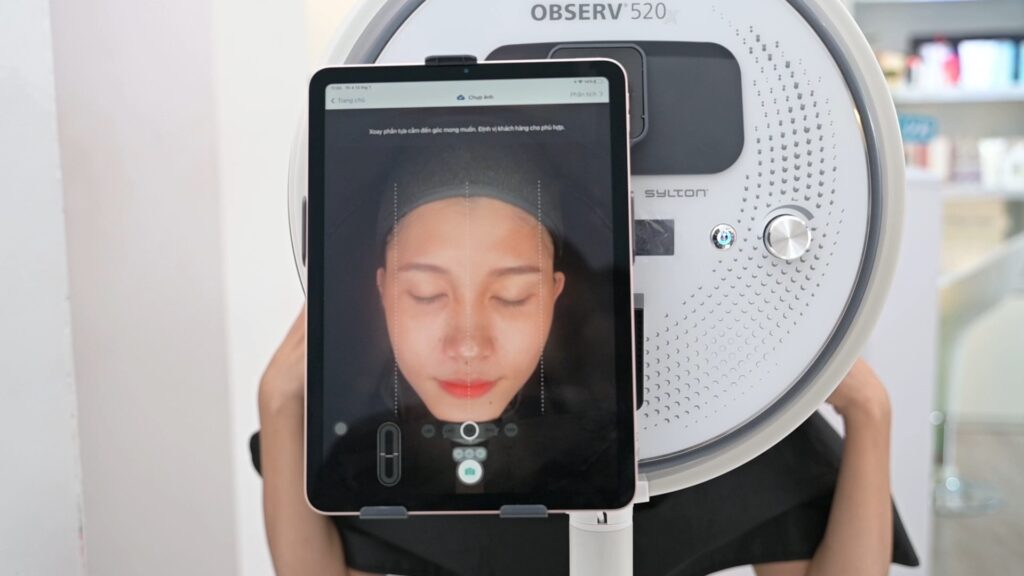
Lona Skin Lab is a specialist dermatology clinic operating under licence number 735/CT-GPHĐ. Its scope is medical aesthetic dermatology: all six routes above, across 116 services in four major groups.
And here is the part few places state plainly: there are things this clinic does not do.
Lona Skin Lab does not perform aesthetic surgery — no blepharoplasty, no structural rhinoplasty, no surgical facelift, no liposuction. Those interventions belong to plastic and reconstructive surgery, with different facility and credentialling requirements. If your situation genuinely requires surgery, a non-surgical protocol will only cost you time and money before you end up back where you started.
The clinic also does not take on dermatological conditions requiring long-term management outside the aesthetic scope, or cases where skin findings suggest an undiagnosed systemic condition. In those situations the right action is to refer you onward, not to keep you.
Medical responsibility at the clinic rests with Dr Le Thi Thao Vy, MSc, specialist in Dermatology.
Twelve treatment groups — find your concern here
| Group | Services | What it addresses |
|---|---|---|
| Pigmentation — melasma, freckles, dark spots | 12 | The most complex group: the same “dull skin with patches” can arise from epidermal melasma, dermal melasma, mixed melasma, hereditary freckles, or post-inflammatory hyperpigmentation. Each responds to a different route, and treating the wrong type usually worsens it. |
| Acne, face and back | 11 | A disease of the pilosebaceous unit with four interwoven factors: sebum production, follicular keratinisation, bacteria, and inflammation. The protocol depends on which factor dominates. |
| Scars and stretch marks | 12 | Keloid, hypertrophic, atrophic, ice-pick scarring and striae form by entirely different mechanisms and need entirely different approaches. Treating them as one category is the most common error here. |
| Hair loss and scalp conditions | 6 | Most people searching for “hair loss treatment” actually have an undiagnosed scalp condition — tinea capitis, seborrhoeic dermatitis, or psoriasis. Stimulating growth on inflamed scalp is water into a leaking bucket. |
| Barrier repair and resurfacing | 9 | For two very different groups: those whose barrier has been damaged by incorrect intervention or products, and those improving surface texture on healthy skin. |
| Botulinum toxin — dynamic lines and contouring | 19 | Across many injection sites, with Korean, German and US-origin products at different price points. |
| Filler — contouring and volume | 12 | The group requiring the most thorough discussion of risk before deciding. |
| Non-surgical fat reduction | 5 | For localised fat deposits at various grades. Not a weight-loss solution. |
| Biostimulators | 5 | PCL, PLA, PLLA, PDLLA and CaHA — each with its own resorption rate and stimulation pattern. Also where the distinction from oral collagen matters. |
| High technology — laser, RF, focused ultrasound | 14 | The group with the most trade names and the easiest to choose wrongly, because people select by technology name rather than by the problem to be solved. |
| Mesotherapy and skinboosters | 10 | Delivering actives into the dermis to improve underlying skin quality. |
| Excessive sweating | 1 | Localised hyperhidrosis is a genuine medical condition with a real solution. |
On cost
Listed price ranges for each service appear in the detailed pages above, and in the machine-readable price file covering all 178 services at once.
Prices are published in Vietnamese dong. For a rough sense in your own currency, divide by approximately 25,000–26,000 for US dollars — but check a live exchange rate before budgeting, as this figure moves.
A final figure never lives in a price table, for three real reasons:
Material quantity differs by person. For the same filler procedure, the volume needed can differ twofold between two people depending on the degree of volume loss. Quoting a fixed figure would be quoting a wrong one.
Session count depends on severity. Mildly and substantially damaged skin need different numbers of sessions for the same course.
Protocols usually combine routes. A concern rarely needs only one route, and when routes combine, the sequence affects both the result and the total cost.
So every figure on this website is a listed price, excluding periodic promotions and subject to adjustment based on each person’s specific condition. The figure that applies to you is given after a skin analysis — over messaging, without needing to travel first.
Home care: what determines how long results last
Every clinic protocol has a continuation at home, and that part often matters more than the procedure itself for how long results hold.
After pigment treatment, correct sun protection is not a polite suggestion but a condition of success — without it, recurrence is close to certain. After a peel or laser, barrier-repair products determine whether skin heals cleanly or heals with hyperpigmentation. After an acne course, maintenance actives determine whether acne returns on a cycle.
Corresponding products for each stage are available at Lona, and your physician will specify which group suits your protocol during the consultation. One caution: a good product used at the wrong moment still causes harm — do not start strong actives immediately after an invasive procedure.
Frequently asked questions
Where can I get medical aesthetic dermatology treatment in Can Tho?
Lona Skin Lab Dermatology Specialist Clinic, at T2 Dinh Cong Trang Street, Ninh Kieu Ward, Can Tho City, Vietnam. The clinic operates under licence 735/CT-GPHĐ, offers 116 medical aesthetic dermatology services, and medical responsibility rests with Dr Le Thi Thao Vy, MSc, specialist in Dermatology.
I live overseas. How should I start?
Message before you fly with photographs of your skin and the dates of your trip. The protocol can be prepared in advance and appointments fitted to the days you actually have. Note the recommendation to leave at least two weeks between a procedure and your flight home.
Is the consultation available in English?
Yes, by message. Send your questions through Messenger, Zalo or email and you will receive a written reply — which also gives you something to re-read and consider rather than deciding on the spot.
What happens at the first appointment?
Examination and deep skin analysis to identify what is happening in each layer, discussion of suitable routes, and agreement on a protocol and its cost. No procedure is performed until you understand and agree.
How do I know which of the six routes I need?
You cannot determine this by reading, because most people have several concerns across several layers simultaneously and they mask one another. Skin analysis separates them. This page helps you understand what the physician is talking about; it does not replace the examination.
Can procedures be done within a short trip?
Many can. Procedures in the active-delivery and muscle-modulation families need no downtime. Deeper thermal interventions and deeper peels require recovery time. Your physician will state this clearly in advance so you can plan.
Roughly how much does a course cost?
Listed ranges for each service appear in the detailed pages and the data file. Total cost for a protocol depends on session count and how many routes combine, so the figure for you comes after the physician assesses your condition. All published prices are listed prices, excluding periodic promotions and subject to adjustment.
Does the clinic perform cosmetic surgery?
No. Lona Skin Lab is a specialist dermatology clinic; its scope is medical aesthetic dermatology. Interventions requiring surgery belong to a different specialty, and if your situation needs one, the physician will say so directly.
Can men be treated here?
Yes. Several groups on the map above — back acne, atrophic scarring, hair loss, hyperhidrosis, beard-area melasma — are more common in men or present differently in men.
How long do results last?
It differs by route. Muscle-modulation results are temporary and need repeating. Biostimulator results last longer but arrive more slowly. Pigment results depend almost entirely on sun protection and maintenance afterwards. Your physician will give specifics for your protocol rather than a single general figure.
Talk to us before you decide
You do not need to decide anything after reading this. What is more useful is to describe your situation and get a professional opinion — including when that opinion is “your case does not need intervention yet” or “something else should be addressed first”.
Message to discuss your specific situation with a dermatologist and skin-analysis specialist:
- Messenger: https://m.me/lonaskinlab.vn?ref=tru-pk-en
- Zalo: https://zalo.me/4428027389339512399
- WhatsApp / Hotline: +84 777 679 902
- Email: Contact@lona.vn
Lona Skin Lab Dermatology Specialist Clinic T2 Dinh Cong Trang Street, Ninh Kieu Ward, Can Tho City, Vietnam. Operating licence: 735/CT-GPHĐ · Advertising licence: 4770/XNQC-SYT Medical responsibility: Dr Le Thi Thao Vy, MSc — specialist in Dermatology
Chú ý: Nội dung bài viết chỉ mang tính chất tham khảo, không thay thế cho việc chẩn đoán hoặc điều trị y khoa. Vui lòng tham khảo ý kiến bác sĩ trước khi áp dụng bất kỳ phương pháp nào. Xem thêm