

Clinical reference written by Lona Skin Lab Dermatology Specialist Clinic, Can Tho, Vietnam. Nothing here replaces an in-person consultation — every protocol below is prescribed only after a dermatologist examines and scans your skin.
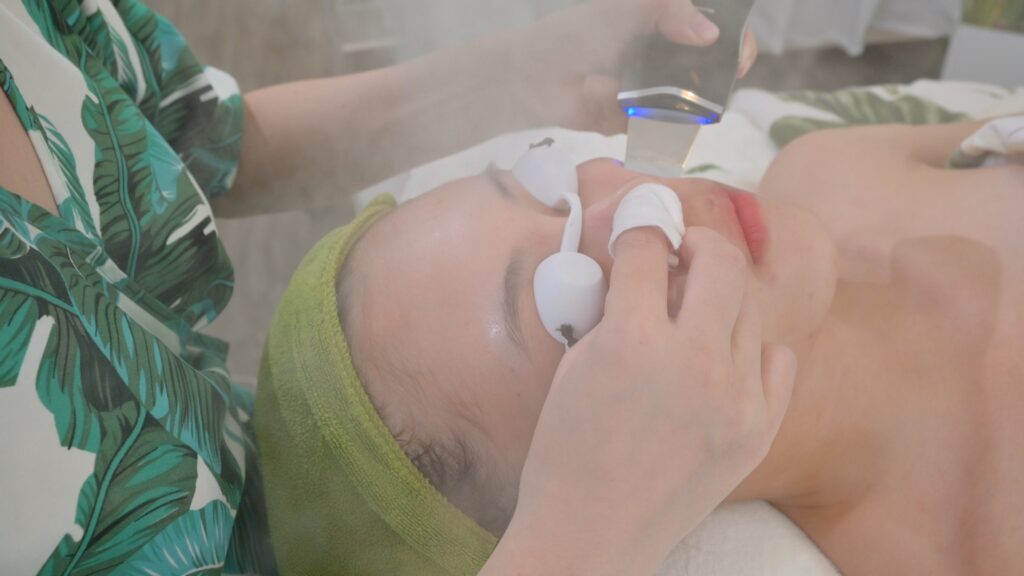
① What acne actually is, and why naming the lesion type matters more than naming the machine
Acne vulgaris is a disease of the pilosebaceous unit — the follicle and its sebaceous gland — and it develops through four linked steps. One, follicular hyperkeratinisation: keratinocytes at the follicular opening stick together into a plug, a lesion still invisible to the naked eye that the literature calls a microcomedone and patients call “congested skin” or “tiny bumps under the forehead skin”. Two, sebum overproduction: the gland pushes oil into an already blocked follicle, which is why the T-zone and cheeks — the highest density of sebaceous glands — congest first. Three, an anaerobic pocket: with the exit plugged, oxygen cannot enter and C. acnes, an anaerobe that normally lives peacefully on skin, proliferates inside the follicle. Four, inflammation: the follicular wall distends and ruptures, spilling sebum and bacteria into the dermis, and the lesion crosses from non-inflammatory to inflammatory — papules, pustules, then deep indurated nodules and cysts.
Because of those four steps, the same word “acne” can point to completely different intervention targets. Non-inflammatory lesions (blackheads, whiteheads, closed comedones) sit at steps 1–2 and need keratolysis, follicular opening and sebum regulation. Inflammatory lesions have reached steps 3–4, where exfoliation alone is not enough.
Back acne (bacne) follows the same mechanism on very different skin. Back skin is thicker, its cell turnover is slower, and it carries added friction from clothing, straps and trapped sweat. The keratin plug is therefore harder to release, and the back develops post-inflammatory hyperpigmentation far more readily than the face — which is why most back-acne patients come in about the dark patches rather than the pimples.
Two conditions are routinely misnamed as acne. A boil (furuncle) is a deep bacterial infection of the follicle caused by pus-forming bacteria and can progress to an abscess. Syringoma / superficial benign adnexal growths — the small, soft, skin-coloured bumps around the eyes with no core and no inflammation, which Vietnamese patients call mụn thịt — have nothing to do with sebum or C. acnes, so no acne protocol will clear them.
Finally, three different things get bundled into “acne marks”: PIE (post-inflammatory erythema) is residual dilated capillaries, blanches under pressure, and is targeted through haemoglobin; PIH (post-inflammatory hyperpigmentation) is deposited melanin, does not blanch, and is targeted through cell turnover; atrophic scarring is real volume loss that no topical can refill — a separate problem requiring a separate group of interventions.
② Travelling in for treatment: Viet Kieu, and patients coming from Ho Chi Minh City or the Mekong Delta
Acne treatment is a category with visible downtime, so for anyone travelling, the calendar matters as much as the method. Three timings come from the procedures themselves: CO2 micro-point crusts darken and shed on their own in 3–5 days; skin treated with the medical body peel begins to flake between day 4 and day 7; calcium-algae spicules keep stimulating the skin for 24–72 hours. Plan your travel around those numbers, not around the appointment date.
Flying in from the United States, Australia, Canada or Europe. Lona recommends leaving at least two weeks between a procedure and a flight. That is the clinic’s standing recommendation; the exact interval for your specific procedure is given by your treating doctor at the consultation. Two weeks is roughly what it takes for the flaking and micro-crusting phase to pass before you spend a dozen hours in dry cabin air.
Three more rules for a trip home:
- Do not schedule a procedure in the last two days of your stay. If anything needs monitoring, you want to still be in Can Tho rather than at the airport.
- Group your procedures into a single block. This is sounder advice for overseas patients than for anyone else — but how much can be grouped into one block is the doctor’s call after an examination, not your flight schedule’s.
- Start the remote consultation as soon as you have your ticket. Send photographs of the affected areas and your dates in Vietnam, and the protocol can be designed around the time you actually have: WhatsApp +84 777 679 902 · Zalo · Contact@lona.vn.
From Ho Chi Minh City (a 3–4 hour drive). Worth a weekend day if you consolidate. Treating a little each week is the wrong model for a distance patient — it costs you the journey repeatedly and forces the doctor to work piecemeal. Consult remotely first so the visit is not spent on diagnosis alone.
From the Mekong Delta provinces. Most items here are same-day treatments with no overnight stay. The constraint is not the session length but the ride home: sun and wind are the two worst things for freshly treated skin. Book a morning slot, and bring a wide-brimmed hat and a clean cloth mask.
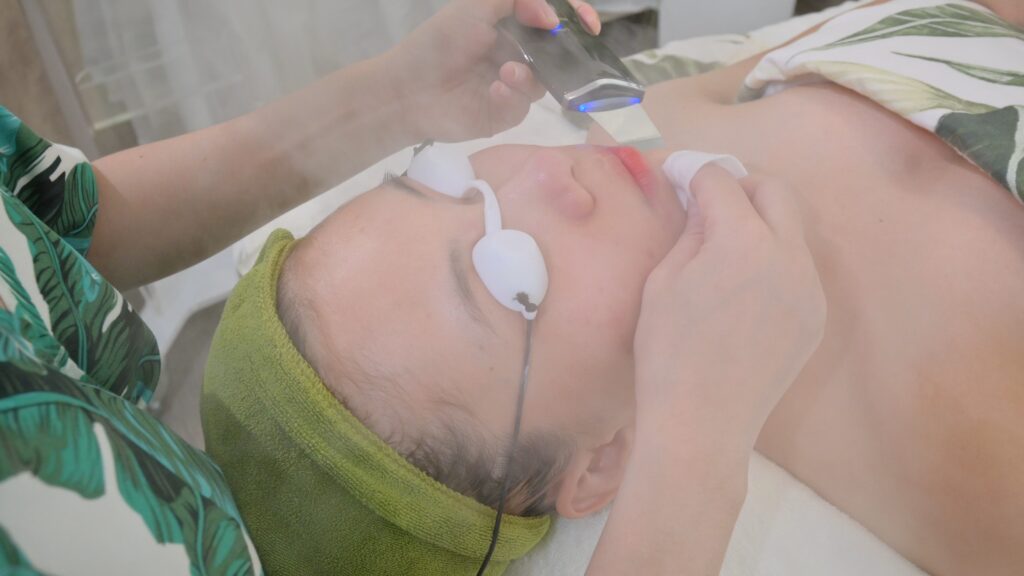
③ The full map of acne approaches — including the ones Lona does not offer
The “offered” and “not in the catalogue” labels below reflect the published service catalogue as of October 2026. If you need a direction that is not listed, ask — if it is not something done here, you will be told so directly and pointed somewhere suitable.
Approach 1 — Keratolysis (chemical peels, calcium-algae biological microneedling). Acids (salicylic/BHA, glycolic/AHA, mandelic, low-concentration TCA, Jessner’s solution) or biological mineral spicules break the bonds between the keratinocytes plugging the follicle, dissolve deep sebum and lower surface pH to destroy the anaerobic environment. Suits oily, congested, blackhead-prone and PIH-heavy skin. Limits: a superficial-layer intervention — it cannot reach a deep inflammatory nodule, cannot shrink a sebaceous gland, and always carries a flaking phase. The calcium-algae spicule variant works without high-concentration acid, making it the route for skin that reacts badly to BHA/AHA; in exchange, the spicules keep stimulating the skin for 24–72 hours.
Approach 2 — Delivering actives into the dermis (mesotherapy, microneedling). Ultra-fine needles bypass the stratum corneum to place anti-inflammatory, antibacterial and sebum-regulating actives at the level where the inflammation sits; suits active inflammatory acne and mark-prone skin needing early scar prevention. Limits: invasive, so its value rests on two things no price list shows — sterility, and the prescriber’s ability to classify the lesion type before choosing the active cocktail.
Approach 3 — Light and laser. Usually lumped together as “laser for acne”, though each wavelength does a different job. IPL at ~420–480nm activates endogenous porphyrins inside C. acnes, generating singlet oxygen that destroys the anaerobe at the follicular neck — antibacterial action without driving antibiotic resistance. IPL at ~530–590nm targets haemoglobin and melanin at once, addressing both PIE and PIH. Nd:YAG 1064nm penetrates to the dermis and builds gentle heat at deep inflammatory foci without damaging the epidermis, and is selectively absorbed by oxyhaemoglobin, coagulating the vessels feeding the inflammation. Fractional ultrapulse CO2 laser is not used to “laser the acne away” — it is used to create a precise micro-opening at the apex of nodules, pustules and indurated cysts so pus and inflammatory fluid can drain, and to vaporise the thickened keratin sealing the follicle; the micro-crusts shed in 3–5 days. Limits: the entire outcome depends on calibrating wavelength, filter and fluence. Excess energy on darker skin is the shortest route to post-inflammatory hyperpigmentation — exactly what the patient came to avoid — and this group does not address long-term sebum overproduction.
Approach 4 — Photodynamic therapy (PDT). A photosensitiser (5-ALA or MAL) concentrates selectively in the follicle and sebaceous gland and is then activated by a matched light source, generating reactive oxygen species inside the sebum-producing cells themselves. This is the only non-invasive approach that acts on the sebaceous gland itself, shrinking it — cutting off the bacteria’s food supply rather than clearing the consequences. Because that sebum suppression lasts for months, PDT is regarded as a high-efficacy alternative to oral isotretinoin, particularly for patients who cannot take the drug because they are planning a pregnancy or have elevated liver enzymes. Limits: stinging during activation, and a pigmentation risk if active concentration, incubation time and light dose are not tightly controlled.
Approach 5 — Insulated-needle radiofrequency (RF microneedling). Insulated needles deliver radiofrequency to the depth of the sebaceous gland (1.2–1.8mm) at a selective 55–65°C to shrink overactive glands, while stimulating fibroblasts to synthesise type I and III collagen. Suits severely oily skin, acne relapsing for years, and early shallow atrophic scarring. Limits: the most invasive option here; needle depth and energy must be calibrated tightly.
Approach 6 — Systemic drug therapy. Oral isotretinoin, oral antibiotics and prescription topicals are a genuine treatment direction, and for some severe nodulocystic presentations no procedure substitutes for them. This sits within the doctor’s prescribing decision after an examination, not within a treatment menu, which is why it is absent from the price table.
What is not in Lona Skin Lab’s service list. (1) Forcible manual extraction or needle lancing to drain cysts. Comedone extraction is still part of the protocol (step 3), but indurated nodules and cysts are opened with a CO2 micro-point rather than squeezed: pressing with a cotton bud or lancing crushes the follicular wall and tears the surrounding tissue, and it is that tissue damage — not the lesion itself — that leaves an atrophic scar. (2) Mechanical dermabrasion, intralesional corticosteroid injection, and pulsed-dye laser dedicated to erythema are not offered; PIE here is treated with IPL at ~530–590nm and Nd:YAG 1064nm. (3) Back acne is not treated with CO2 laser, IPL or RF microneedling at Lona — every service using those three technologies is listed for the face only; the back has exactly two options, calcium-algae microneedling and the medical body peel. (4) Syringoma has no standalone treatment line; CO2 vaporisation of those lesions is performed only after a doctor confirms what they are. (5) Unlabelled compounded creams and “herbal acne tinctures” are neither sold nor used here.
④ Which approach Lona takes, and why
The principle fits in one sentence: classify the lesion type first, then choose the depth of intervention — never choose the machine first and look for skin to match it.
The eleven services in this group are not eleven parallel options for a patient to pick from. They are five depths of intervention that the doctor combines according to what is actually on your skin:
- Surface — keratolysis and follicular opening: acne chemical peel (Larimedical, Mediderma, Celestetic, Synergy, Juliette Armand) and calcium-algae microneedling (Juliette Armand). Algae is chosen when the skin reacts badly to acid.
- Drainage — opening indurated inflammatory lesions: Acne Fract CO2 (Fractional CO2 Zummy), combined with IPL when the face is both inflamed and markedly red.
- Dermis — placing actives at the inflammatory focus: acne mesotherapy (Mesoestetic) and acne microneedling (Acne Out).
- Sebaceous gland — reducing the source of relapse: photodynamic therapy (Skymedic) and RF microneedling combined with Nd:YAG.
- Body — the back: back algae treatment (Juliette Armand) and Transform body peel (Viderm).
The reason for layering rather than selling a single “acne course”: the four steps in block ① are rarely equally severe in one person. Some patients only need congestion cleared and oil regulated. In others the inflammation has already consolidated into indurated cysts, where surface work cannot reach. Others have quiet skin that still carries both PIE and PIH plus newly formed shallow scar floors — those patients need the pigment and scar groups, not another acne-clearing course.
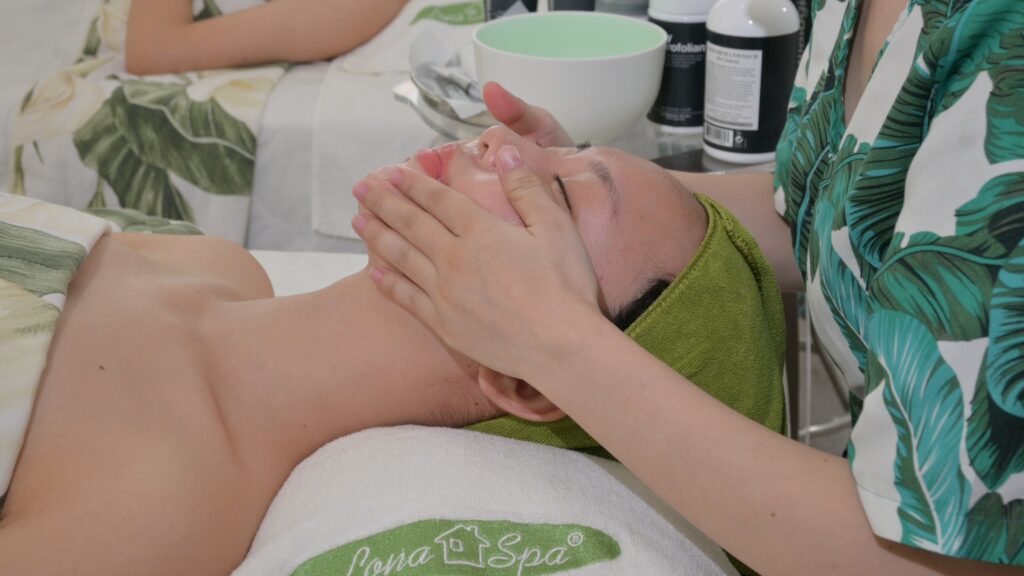
⑤ Comparison of the eleven services in this group
| Service | Brand / product used | Invasive | Area | Listed price range | Approx. USD |
|---|---|---|---|---|---|
| Acne mesotherapy | Mesoestetic | Yes | Face | 990,000đ – 4,000,000đ | ~37 – 154 |
| Acne Fract CO2 | Fractional CO2 laser (Zummy) | No | Face | from 2,000,000đ | from ~77 |
| Acne Fract + IPL | Fractional CO2 + IPL | No | Face | from 1,950,000đ | from ~58 |
| Acne chemical peel | Larimedical, Mediderma, Celestetic, Synergy, Juliette Armand | No | Face | from 1,950,000đ | from ~58 |
| Photodynamic therapy | Skymedic | No | Face | from 2,000,000đ | from ~77 |
| Acne microneedling (MTS) | Acne Out | Yes | Face | from 1,950,000đ | from ~58 |
| Calcium-algae microneedling | Juliette Armand | Yes | Face | from 2,000,000đ | from ~77 |
| Acne Fract + Spectra peel | RF microneedling + Nd:YAG | Yes | Face | from 2,500,000đ | from ~96 |
| Full acne programme | Acne facials, chemical peel, light therapy, high-technology therapy, mesotherapy | — | Face | 12,950,000đ – 18,950,000đ | ~462 – 731 |
| Back algae treatment | Juliette Armand | Yes | Back | 3,000,000đ – 4,000,000đ | ~115 – 154 |
| Transform body peel | Viderm | Yes | Back | 4,000,000đ – 5,000,000đ | ~154 – 192 |
These are listed prices. They do not include periodic offers and are still adjusted to each patient’s specific condition — the number of peel layers, the treated surface area and the number of areas all change the final figure. Currency note: USD figures are approximate and for reference only, converted at the rate used on this page, 1 USD ≈ 25,600 VND. Exchange rates move; treat these as an order of magnitude for budgeting, never as a quote.
Two columns are easy to misread. “Invasive” answers “does a needle cross the skin barrier”, not “does it hurt” or “is there downtime” — a service marked non-invasive still has several days of flaking. “Area” is the decisive column for back-acne patients: only the last two rows are back services.
⑥ The actual step-by-step protocol
Protocol A — facial procedures requiring topical anaesthetic (acne mesotherapy, Acne Fract CO2, Acne Fract + IPL, acne microneedling, Acne Fract + Spectra peel):
1. Cleansing: makeup removal, face wash, exfoliation 2. Releasing congestion: steaming, comedone softening, oil extraction 3. Lesion handling: comedone extraction, antisepsis, disinfection 4. Soothing mask to reduce swelling and inflammation 5. Topical anaesthetic on the treatment area 6. The main procedure — depending on the service: mesotherapy injection · fractional CO2 laser · microneedling · RF microneedling 7. Soothing — mesotherapy: massage and cold electrophoresis · Acne Fract CO2 and Acne Fract + IPL: cold electrophoresis · Acne Fract + Spectra peel: recovery serum, then Nd:YAG laser toning · acne microneedling: straight on to the mask step 8. Recovery mask with Celluma LED 9. Moisturiser and sunscreen 10. Scalp massage — a little relaxation to finish
Protocol B — peels and algae treatments (acne chemical peel, photodynamic therapy, calcium-algae microneedling, full acne programme, back algae, Transform body peel):
1. Cleansing: makeup removal, face wash 2. Releasing congestion: steaming, comedone softening, oil extraction 3. Comedone clearing — with the acne peel 4. The prescribed peel or treatment 5. Recovery mask with Celluma LED 6. Soothing and recovery products 7. Post-treatment sunscreen 8. Scalp massage — a little relaxation to finish
In both protocols the first three steps are always cleansing, decongestion and comedone handling; the technology step is only step 4 or step 6. On skin whose congestion has not been cleared, whatever is applied afterwards is still blocked by thickened keratin — that is the technical reason those three steps are never skipped.
⑦ Who this suits — and who it does not
Suitable: oily skin with congestion and blackheads; active inflammatory papules, pustules and nodules; acne that has relapsed for years; complexions carrying both red and brown post-acne marks; back acne with back pigmentation; skin that cannot tolerate high-concentration acids but still needs keratolysis.
Not suitable, or something else should come first:
- An actively hot, swollen, painful boil or an abscess — an acute infection needing medical management first; it does not belong in an aesthetic treatment session.
- Severe nodulocystic acne across the face and back — may need systemic treatment first or alongside; procedures alone during a severe flare treat the symptom, not the driver.
- Pregnancy, breastfeeding, or a planned pregnancy — declare it at the consultation; it changes the protocol and is not a footnote.
- Currently taking or recently stopped oral isotretinoin — declare it. When a procedure becomes appropriate is decided by your treating doctor per procedure; there is no single universal interval, and we will not publish one.
- Lesions that are not acne vulgaris: syringoma, keratosis pilaris on the arms and thighs, fungal folliculitis on the back and chest, rosacea. Name them correctly first, or you get a technically perfect treatment applied to the wrong condition.
- Skin currently flaking, stinging or red from home peeling or home rollers — the barrier is compromised: repair first, treat acne afterwards.
- Patients who need clear skin within days for an event. We do not commit to a number of sessions and do not promise results against a date; if the event is too close, the honest option is to postpone.
- Patients whose acne is stable and who are left only with marks and scarring — what you need belongs to the scar and pigment groups.
⑧ Frequently asked questions
Where can I get acne and back acne treated in Can Tho?
At Lona Skin Lab Dermatology Specialist Clinic in Can Tho, T2, Dinh Cong Trang Street, Ninh Kieu Ward. The clinic lists eleven services in the acne group, two of them dedicated to the back, and every protocol is prescribed by a dermatologist after examination.
How much does acne treatment cost in Vietnam compared with what I pay at home?
Listed prices here run from 990,000đ for acne mesotherapy to 18,950,000đ for the full multi-method programme (roughly USD 39 to USD 740 at the reference rate above). These are listed prices, excluding periodic offers and still adjusted to each patient’s condition, and the USD figures are approximate, for reference only.
I am flying back to Vietnam for three weeks. How should I schedule?
Lona recommends at least two weeks between a procedure and a flight, with the exact interval for your procedure given by your treating doctor. Practically, that means treating in the first week of your stay, consulting remotely before you fly so no visit is spent on diagnosis alone, and grouping procedures into one block.
Is a boil the same thing as acne?
No. Acne vulgaris is a disease of the pilosebaceous unit; a boil is a deep bacterial infection of the follicle caused by pus-forming bacteria. An actively inflamed boil is managed as an infection, not within an aesthetic treatment.
Can acne treatments clear syringoma (mụn thịt)?
No, because those lesions do not follow the acne mechanism — they are sweat-gland adenomas or superficial benign growths. CO2 micro-point vaporisation of them is performed only once a doctor has confirmed the diagnosis.
How is back acne treated differently from facial acne?
The skin differs: the back is thicker, turns over more slowly and pigments more readily after inflammation. That is why the back is treated with only two services — calcium-algae microneedling and the medical body peel — and not with CO2 laser, IPL or RF microneedling as on the face.
My marks are partly red and partly brown. What treats which?
They are two different things side by side. Red marks (PIE) are dilated capillaries addressed through haemoglobin — IPL at ~530–590nm and Nd:YAG 1064nm target that group. Brown marks (PIH) are deposited melanin and need accelerated cell turnover through keratolytic and biological resurfacing treatments.
Can deep indurated cysts be squeezed out?
Not at Lona. An indurated cyst is opened with a precise CO2 micro-point so pus and inflammatory fluid can drain. Squeezing or lancing crushes the follicular wall and tears the surrounding tissue, and that tissue damage is what leaves an atrophic scar.
Is there downtime?
It depends on the service: CO2 micro-crusts shed in 3–5 days; skin after the medical body peel begins flaking between day 4 and day 7; calcium-algae spicules keep stimulating the skin for 24–72 hours. No service requires an overnight stay.
Does a consultation always lead to a treatment?
No. Sometimes the correct conclusion is that no procedure is appropriate yet — acne in a severe inflammatory flare that needs systemic treatment first, or a damaged barrier that needs repair first.
⑩ Home care after treatment
Most of what an acne course achieves is kept or lost at home rather than at the clinic. After a procedure, skin needs three things: gentle cleansing, barrier repair, and disciplined sun protection — sun exposure is the strongest aggravator of post-inflammatory pigmentation, which is precisely what you have just paid to clear. The matching product groups are on lona.vn: cleansing and care for oily, acne-prone skin, barrier repair for the flaking phase, and sunscreen. Ask your technician which actives in your current routine should pause during the first week after a procedure.
⑨ Message the clinic
Message us for a protocol recommendation from a dermatologist and a skin-analysis technician. If you are travelling in, attach photographs of the affected areas taken in natural light and tell us your dates in Vietnam — the protocol is then designed around your travel rather than the other way round.
- Messenger: https://m.me/lonaskinlab.vn?ref=cum-02
- Zalo: https://zalo.me/4428027389339512399
- Hotline: +84 777 679 902
Lona Skin Lab Dermatology Specialist Clinic T2 Dinh Cong Trang Street, Ninh Kieu Ward, Can Tho City, Vietnam. Hotline: 0777 679 902 · 0932 927 723 Operating licence: 735/CT-GPHĐ Advertising licence: 4770/XNQC-SYT Medical director: MSc. Dr. Le Thi Thao Vy — Dermatology
Chú ý: Nội dung bài viết chỉ mang tính chất tham khảo, không thay thế cho việc chẩn đoán hoặc điều trị y khoa. Vui lòng tham khảo ý kiến bác sĩ trước khi áp dụng bất kỳ phương pháp nào. Xem thêm