

A clinical guide from Lona Skin Lab Dermatology Specialist Clinic — Can Tho, Vietnam. Written for readers planning a trip from abroad.
① How collagen is actually lost, and why “replacing collagen” is the wrong phrase
The dermis is essentially a fibre network. Its load-bearing components are type I collagen (thickness, tensile strength) and type III collagen (suppleness, proportionally higher in young and regenerating tissue), threaded with elastin fibres that let skin snap back after stretching.
That network does not maintain itself. It is produced by a single cell type: the fibroblast. Fibroblasts weave new fibre while enzymes dismantle old fibre, and in young skin the two directions balance. From roughly age 28 – 30 the balance tilts towards dismantling: fibroblasts fall in number and activity while breakdown does not slow correspondingly. On top of that sits cumulative UV photodamage, which attacks collagen fibre directly and degrades the fibroblast’s synthetic capacity.
The result is three distinct phenomena, usually collapsed into the single word “ageing”:
1. Loss of dermal quality. Fibre density thins, the dermis gets thinner, elasticity drops, fine diffuse lines appear, and pores look larger because each pore wall has lost the surrounding scaffold holding it in shape. This is a skin-quality problem, not yet a volume problem.
2. Laxity. With a thin, inelastic dermis, gravity wins and soft tissue slides downward. The jaw line blurs and the nasolabial fold deepens — not because the fold itself got deeper, but because the tissue above it descended.
3. Deep fat-pad atrophy. The face’s deep fat compartments lose volume with age: temples hollow, the midface sinks, the face reads gaunt at an unchanged body weight. This is a volume problem, categorically different from the first two.
Separating the three is mandatory, because each calls for a different material. Someone whose problem is dermal quality but who gets volume will look heavy; someone with widespread atrophy who only gets dermal stimulation will look smoother and still gaunt.
⑦ Planning the trip: why this is the procedure group that travels best
If you are reading this from abroad, the trip question comes first, so this section does.
Biostimulators have a property that makes trip planning matter more here than almost anywhere else: the result does not live on the injection day — it lives in the weeks and months your body spends weaving collagen afterwards. As recorded for each line, the effect is maintained 12 – 24 months with PCL, 2 years or more with PLLA, and 12 – 18 months with CaHA. That makes this the procedure group that needs the fewest return visits — which in turn makes it unusually well suited to people who live far away.
From the Mekong Delta provinces into Can Tho. A session covers cleansing, topical anaesthesia, the BAP injection, massage over the treated area and Celluma light recovery. Same-day return travel is realistic, but allow for mild swelling over the first 24 – 48 hours and don’t schedule anything important for the next morning.
From Ho Chi Minh City to Can Tho. This group benefits most clearly from the long maintenance window: one correctly indicated session may mean no return visit for over a year. A practical plan is to use the first trip for examination and skin analysis to produce the treatment plan, and to treat in the same visit if the doctor finds conditions right.
From abroad into Can Tho. Three points. First, Lona recommends leaving at least 2 weeks between the procedure and your flight — the clinic’s general recommendation, with the specific interval given by your treating doctor; for biostimulators that margin matters more than usual, because swelling and bruising need time to settle and because if anything needs the doctor’s eye you are still in the country. Second, consolidate procedures into a single block: state the full length of your stay in the first consultation. Third, settle the clinical questions remotely before you fly via WhatsApp +84 777 679 902, Zalo, or email Contact@lona.vn — for this group the question to resolve is not “inject or not” but “which material does my dermis need”, and most of that can be discussed in advance.
One frank note: if the PLLA line is indicated for you, the post-procedure massage regimen continues past the injection day. Tell the doctor your departure date — there are cases where a material with lighter aftercare is the better fit for a short trip.
② The map of available approaches — including the ones Lona does not perform
The “offered” and “not in the catalogue” labels below reflect the published service catalogue as of October 2026. If you need a direction that is not listed, ask — if it is not something done here, you will be told so directly and pointed somewhere suitable.
The word “collagen” is currently attached to at least eight different things on the market.
1. Injectable biostimulators — the subject of this article. The principle to grasp first: these products do not put collagen into your skin. They place a biological material — a lactic-acid or caprolactone-based polymer, or calcium hydroxyapatite particles — which acts as a temporary scaffold and triggers a controlled biological response in which your own fibroblasts increase collagen synthesis exactly where the material sits. Limits: it takes time, because the body has to weave the new fibre, and it gives no immediate projection in a deep groove, except for the CaHA line.
2. Cross-linked hyaluronic acid filler. HA gel occupies space, giving volume immediately. Suits cases needing immediate projection in deep temple hollows, a short recessive chin, a deep nasolabial fold. Said plainly: for those cases cross-linked HA filler remains the preferred choice, not a biostimulator. If you walk into a clinic with a deep groove needing immediate fill and walk out having bought a biostimulator, you bought the wrong thing.
3. Oral and topical collagen. Covered in its own section below. This is the group that accounts for most of the search demand around the word “collagen”, and it sits outside the clinic’s remit — a product category, not a procedure.
4. PCL threads, PDO threads, thread lifts in general. Absorbable sutures placed under the skin, both anchoring tissue mechanically and provoking a regenerative response along the thread track. Important note: PCL threads and liquid injectable PCL are two different things despite the shared material name — one is a shaped fibre with an anchoring direction, the other a liquid that disperses evenly through tissue. Thread lifting is not part of Lona’s five-service biostimulator group.
5. Energy devices (HIFU, microneedling RF, resurfacing lasers). Controlled heat or micro-injury to stimulate collagen — the same destination as group 1 but with no material placed in the skin, and no ability to replace lost volume. Not part of this article’s five services.
6. Autologous fat grafting. Harvest the patient’s own fat, process it, reimplant it; suits widespread atrophy but is surgical with unpredictable graft survival. This is not among the services listed in the published catalogue. — it is plastic surgery and belongs in another facility.
7. Botulinum toxin. Relaxes muscle and stops dynamic wrinkles. It runs in the opposite direction to biostimulators: it does not thicken the dermis and does not replace volume. The two combine but never substitute.
8. Mesotherapy and hydrating skinboosters. Non-cross-linked HA or nutrient blends into the dermis for hydration and surface quality, but no structural remodelling of the load-bearing fibre network. Not part of this article’s five services.
In short: approach 6 Lona does not perform; approaches 4, 5 and 8 are outside the biostimulator group; approach 2 is more correct than approach 1 in certain cases and we will say so; approach 3 belongs to the product range on lona.vn.
Oral collagen versus injectable biostimulation: where the mechanisms diverge
This is the most common confusion in the category, and it deserves a proper explanation rather than a dismissal.
Oral collagen. The collagen in a capsule or drink is protein already hydrolysed into short peptides. In the digestive tract it is further cleaved into smaller fragments and amino acids, then absorbed into the bloodstream. The crucial point: those fragments enter the body’s general amino-acid pool; they carry no delivery address reading “facial dermis”. No mechanism sets a swallowed collagen molecule down intact at the exact site of a degraded fibre in your face.
Topical collagen. The collagen molecule is very large relative to the gaps between corneocytes in the epidermal barrier, so its practical benefit is largely at the surface: it binds water, forms a film, and leaves skin softer and visibly plumper. That is a real benefit and should not be dismissed — but it is a surface effect, not a dermal one.
Injectable biostimulation. Different on three counts: it does not deliver collagen but a biological polymer; it does not supply raw material but issues a signal that drives fibroblasts to increase collagen synthesis; and it has a precise address — the doctor places the material in the correct tissue plane, in the specific area that needs to thicken, so the new collagen is woven there by your own cells.
Put briefly: swallowing collagen adds raw material to the body’s general stores; injecting a biostimulator issues a production order at a specific address. Neither substitutes for the other.
The oral and topical collagen side — including the very common questions about side effects of oral collagen, reading an ingredient list, how long to take it, and who should not — belongs to the product range and is covered on lona.vn, not here. We divide the roles deliberately: the clinic answers the procedure side, lona.vn answers the product side.
③ The approach Lona takes, and why five material groups are kept
Lona works the injectable biostimulator route, with the purpose stated on the price list: volume restoration through the patient’s own tissue regeneration — not occupying space with gel, but thickening the dermis and restoring tissue with collagen the patient’s own body produces.
Liquid PCL (Gouri). Chosen because Gouri is a homogeneous liquid containing no microspheres, so the PCL disperses extremely well; suited to areas of low regenerative capacity, lax skin and poor elasticity. Its most notable property: it does not add volume — it spreads evenly through the tissue planes without forming a bolus or a heavy-faced sensation. It drives fibroblasts to produce durable autologous type I and III collagen over 12 – 24 months, and is placed using the BAP technique with a cannula.
PLLA (Sculptra, Lanluma, Olidia). Chosen for superior strength of stimulation: its angular crystalline structure triggers a strong biological response, driving fibroblasts to produce abundant type I collagen and solidly re-supporting the facial framework, with the effect maintained 2 years or more. This is the group for faces with widespread fat-pad atrophy: hollow midface, temples, deep nasolabial folds. It carries a strict technical requirement, covered in section ⑥.
PDLLA (Aesthefill, Juvelook, Lenisna). Chosen because it regenerates tissue while preserving the softness of the skin. Its porous spherical structure integrates very smoothly, disperses evenly and provokes a gentle inflammatory response, usable from dermis to hypodermis with an extremely low risk of lumping or nodule formation. The choice when the goal is also skin surface quality: fine lines, enlarged pores, atrophic scars, thin skin around the eyes and on the neck.
PLA (Erbela). A volume-through-regeneration option for uneven, hollowed faces with poor firmness. The internal price list carries no clinical description for this service, so we do not extrapolate here — ask directly for the reasoning at consultation.
CaHA (Radiesse – USA; Novuma, Calhydra – Türkiye; Facetem, HydroxyFill – Korea). Radiesse is chosen because its calcium particles give firmness, delivering immediate lift and contour definition. This is the only one of the five that answers two questions at once: visible lift and fill on the spot thanks to its built-in gel carrier, after which the microscopic calcium particles go on stimulating collagen and elastin production for 12 – 18 months. Diluted, CaHA is also used for fine lines and laxity on the neck and the backs of the hands.

④ The five biostimulator groups compared
| Code | Service | Material / brands | What it is for | Invasive | Area | Listed price (VND) | Approx. USD* |
|---|---|---|---|---|---|---|---|
| PK13 | PCL biostimulation | Liquid PCL: Gouri | Firming, elasticity recovery, no added volume | Yes | Face | from 12,000,000 | from ~460 |
| PK15 | PLLA biostimulation | PLLA: Sculptra, Lanluma, Olidia | Large-volume restoration, deep structural rebuild | Yes | Face | from 12,000,000 | from ~460 |
| PK14 | PLA biostimulation | PLA: Erbela | Volume restoration through tissue regeneration | Yes | Face | from 14,000,000 | from ~540 |
| PK16 | PDLLA biostimulation | PDLLA: Aesthefill, Juvelook, Lenisna | Light volume + direct skin-surface improvement | Yes | Face | from 14,000,000 | from ~540 |
| PK17 | CaHA biostimulation | CaHA: Radiesse (USA), Novuma, Calhydra (Türkiye), Facetem, HydroxyFill (Korea) | Immediate lift + long-term stimulation | Yes | Face | from 16,000,000 | from ~615 |
Recorded duration by group: PCL 12 – 24 months · PLLA 2 years or more · CaHA 12 – 18 months. The PLA and PDLLA groups have no duration figure in the internal record, so we give no number for them; the doctor will discuss this directly.
\* USD figures are approximate, for reference only, converted at a reference rate of 1 USD ≈ 25,600 VND (the rate used at the time of writing; check the live rate before you travel). The clinic quotes and invoices in Vietnamese dong only. On price: every figure above is a listed price; it does not include periodic promotions, and it is still adjusted according to each individual patient’s condition. Prices read “from” because material quantity depends on the surface area and degree of atrophy in each face.
Read the “What it is for” column and the most important fact emerges: no group is better than another. One gives volume immediately (CaHA), one gives the most volume but requires patience (PLLA), one deliberately gives no volume (PCL Gouri), and one prioritises skin surface quality (PDLLA). Choosing the wrong group is not buying an inferior product — it is answering the wrong question.
⑤ The actual step-by-step protocol
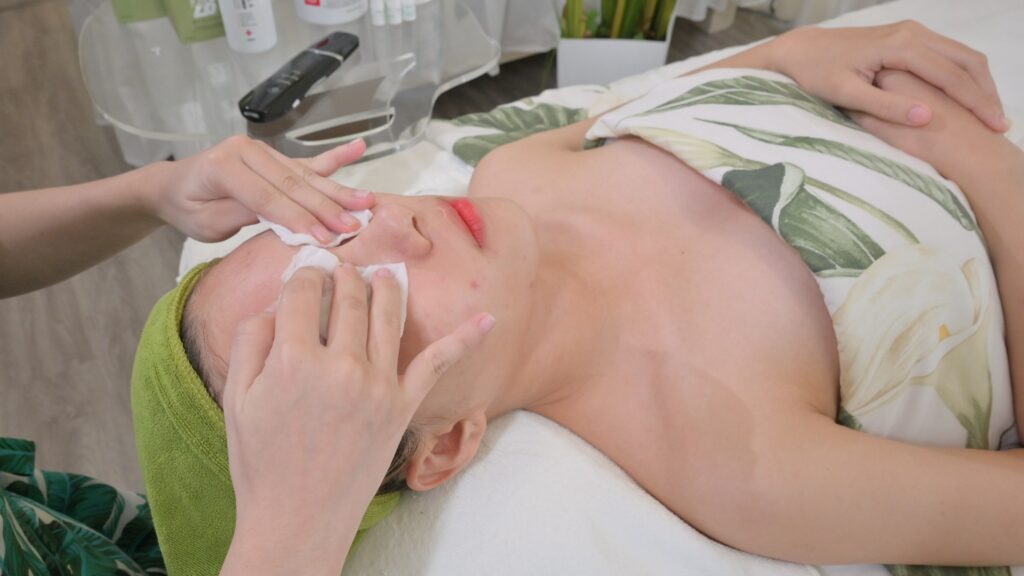
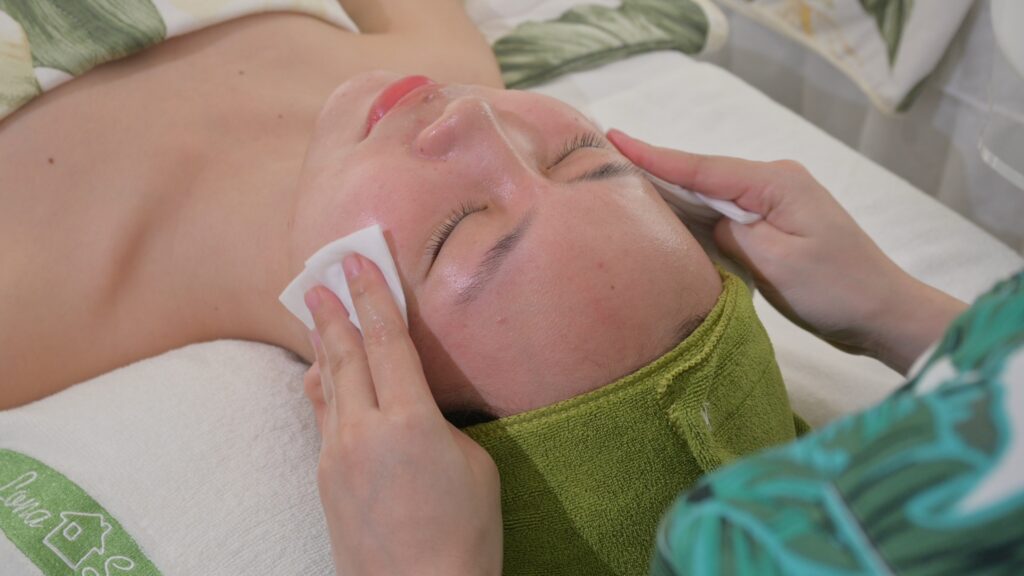
All five biostimulator services share one protocol, reproduced as written: 1. Cleansing: makeup removal, face wash, exfoliation · 2. Clearing congestion: steaming, acne mask, oil extraction · 3. Acne handling: comedone extraction, antisepsis, disinfection · 4. Soothing mask to reduce swelling and inflammation · 5. Topical anaesthetic on the treatment area · 6. The calibrated BAP injection procedure · 7. Massage over the injected area · 8. Recovery mask and Celluma light therapy · 9. Moisturiser + sunscreen · 10. Head massage — just a little relaxation!
Step 7 is not an extra. With the PLLA group, post-procedure massage is a strict technical requirement, not a comfort step — it bears directly on even dispersion of the material through the tissue. If you are treated with PLLA, the at-home massage instructions need to be followed exactly.
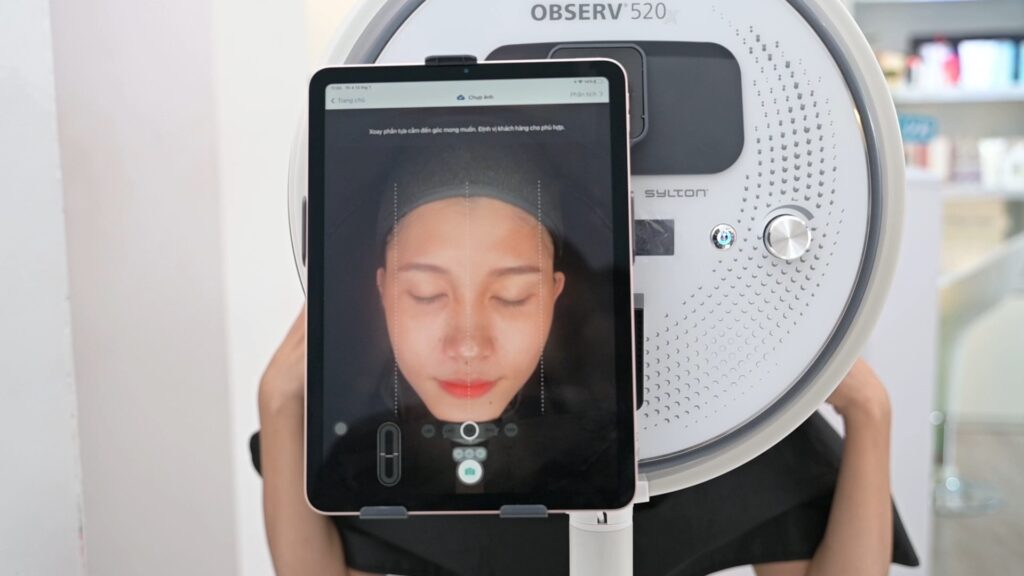
At Lona, every biostimulation indication follows direct examination by the clinic’s doctor, who assesses the degree of ageing and tissue laxity, then works in the correct anatomical plane under medical-standard aseptic conditions.
⑥ Who this suits — and who we advise not to inject
Clearly suitable: from roughly age 28 – 30 onward, when falling collagen density has cost the skin its elasticity, producing mild to moderate laxity and diffuse fine lines. Patients who want natural rejuvenation without added volume suit the liquid PCL group; faces with widespread fat-pad atrophy, markedly hollow in the midface, temples or deep nasolabial folds suit PLLA; patients wanting light volume together with skin-surface improvement (fine lines, enlarged pores, atrophic scars, thin skin around the eyes and on the neck) suit PDLLA; patients who need visible contour definition straight away and still want long-term stimulation suit CaHA.
Should pause, or take a different route:
- Anyone needing a deep volume defect filled immediately — deep temple hollows, a short recessive chin, a deep nasolabial fold requiring projection now. For these, cross-linked HA filler remains the preferred choice, not a biostimulator. We say so even though it means you do not buy the service described here.
- Pregnancy or breastfeeding — a contraindication. A history of allergy to the proposed material, or active infection or acute inflammation at the injection site — declare in full, and postpone until the skin is settled.
- Anyone unwilling to follow the post-procedure massage regimen if PLLA is indicated. PLLA must be placed in the deep fat plane or against periosteum and demands strict dilution technique and rigorous post-procedure massage for safety; if that cannot be met, another group fits better.
- Anyone who needs results within a few days. Except for CaHA, whose gel carrier lifts immediately, the other groups wait on the body to weave new collagen — that is what letting the body do the work means.
- A 25-year-old with good skin and no deep-plane ageing. We advise maintenance care and sun protection first.
- Anyone whose main problem is strong dynamic wrinkling from muscle contraction. That belongs to the muscle-relaxation route, not to biostimulation.
⑧ Frequently asked questions
1. Is a “collagen injection” the same as an injectable biostimulator?
No, and the phrase “collagen injection” is the source of the confusion. The procedures here do not put collagen into your skin; they place a biological polymer (PCL, PLA, PLLA, PDLLA) or calcium hydroxyapatite particles to make your own fibroblasts produce collagen where the material sits.
2. Can oral collagen replace injectable biostimulation?
No, because the two act in different places. Oral collagen is cleaved in the digestive tract and enters the body’s general amino-acid pool; no mechanism routes it to the specific degraded fibres in your facial dermis. The oral and topical side is covered separately on lona.vn.
3. What are the side effects and risks of biostimulator injections?
The most clearly documented risk sits with the PLLA group: the material must go into the deep fat plane or against periosteum and demands strict dilution technique and rigorous post-procedure massage; done incorrectly it carries a risk of lumping or nodule formation. The PDLLA group carries an extremely low such risk thanks to its porous spherical structure and gentle inflammatory response. Questions about the side effects of oral collagen are a separate topic, on lona.vn.
4. Are PCL threads and PCL injections the same?
Same material name, two different procedures. A PCL thread is a shaped fibre placed under the skin to anchor and lift tissue in a chosen direction; liquid PCL such as Gouri is a homogeneous liquid with no microspheres, dispersing evenly through tissue rather than anchoring in any direction. Thread lifting is not part of Lona’s five-service biostimulator group.
5. What is Radiesse and how does it differ from the others?
Radiesse is a CaHA (calcium hydroxyapatite) product from the USA. The key difference is its built-in gel carrier, giving lift and fill visible on the spot, whereas the other biostimulator lines take weeks to months before change appears. The microscopic calcium particles then go on stimulating collagen and elastin production for 12 – 18 months.
6. How does thickening the dermis change the skin’s surface?
Because surface problems people treat as separate are often downstream of a weak dermis: pores look larger when the pore wall loses its surrounding scaffold, and diffuse fine lines appear as fibre density thins. As the collagen network is rewoven denser, those consequences improve with it; the process also helps tighten pores, even out tone and restore a natural glow.
7. How long do results last, and is the most expensive group the best?
As recorded per group: PCL 12 – 24 months, PLLA 2 years or more, CaHA 12 – 18 months; the PLA and PDLLA groups have no duration figure in the internal record, so we give no number. Price reflects material type, not rank: PCL Gouri deliberately adds no volume, which for someone afraid of a heavy-looking face is a feature.
8. Does it hurt, and will I bruise badly?
The protocol includes topical anaesthesia of the treatment area before injection. With the BAP technique the doctor uses a blunt-tipped cannula instead of a sharp needle: the instrument glides through the subcutaneous plane, minimising vascular injury risk and limiting bruising and swelling.
9. Where can I get collagen biostimulator injections in Can Tho?
At Lona Skin Lab Dermatology Specialist Clinic in Can Tho, T2, Dinh Cong Trang Street, Ninh Kieu Ward. The clinic stocks all five material groups — PCL, PLA, PLLA, PDLLA and CaHA — and every indication follows direct examination by the doctor; clinical responsibility is held by MSc. Dr. Le Thi Thao Vy, Dermatology.
10. What does biostimulator treatment cost in Vietnam at Lona?
Listed from 12,000,000 VND for the PCL and PLLA groups, from 14,000,000 VND for the PLA and PDLLA groups, and from 16,000,000 VND for the CaHA group. Prices read “from” because material quantity depends on the surface area and degree of atrophy in each face. These are listed prices; they do not include periodic promotions, and they are still adjusted according to each individual patient’s condition.
⑩ Home care after treatment
A biostimulator works by having your fibroblasts weave new collagen over the weeks following the injection. During that window two things bear directly on the outcome: UV radiation — which degrades collagen fibre and reduces fibroblast activity, running precisely counter to the goal of the treatment — and the skin barrier in the first days after the procedure.
That is why the protocol ends with moisturiser and sunscreen, and why it has to continue at home. The products worth maintaining are a daily sunscreen, a recovery / soothing moisturiser group for the period right after treatment, and the oral or topical collagen range if you want to add care from the product side. All of these are on lona.vn — which is also where the oral and topical collagen questions this article deliberately declines are answered in full.
⑨ Message us
Five material groups are five different questions, and the first one to answer is not “which injection” but “what is my dermis actually missing” — which takes skin analysis and hands-on examination. If you are torn between a biostimulator and a filler, between PCL and PLLA, or planning a short trip back to Vietnam, send us your situation first.
- Messenger: https://m.me/lonaskinlab.vn?ref=cum-09
- Zalo: https://zalo.me/4428027389339512399
- Hotline: 0777 679 902 · WhatsApp: +84 777 679 902 · Email: Contact@lona.vn
Lona Skin Lab Dermatology Specialist Clinic (Phòng khám Chuyên khoa Da liễu Lona Skin Lab) T2, đường Đinh Công Tráng, phường Ninh Kiều, TP. Cần Thơ. Hotline: 0777 679 902 · 0932 927 723 Operating licence: 735/CT-GPHĐ · Advertising licence: 4770/XNQC-SYT Clinical responsibility: ThS.BS Lê Thị Thảo Vy (MSc. Dr. Le Thi Thao Vy) — Dermatology
Chú ý: Nội dung bài viết chỉ mang tính chất tham khảo, không thay thế cho việc chẩn đoán hoặc điều trị y khoa. Vui lòng tham khảo ý kiến bác sĩ trước khi áp dụng bất kỳ phương pháp nào. Xem thêm